
"Korean coffee trends"
60 article(s) found
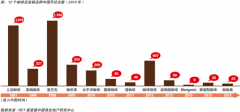
Research report on the Development trend of Korean Coffee shops in China
In the traditional impression, the European and American coffee shop brand Starbucks has been the "coffee shop scenery" in major cities for a long time, but in recent years, similar to popular film and television dramas, fashion clothing and other fields, there has also been a "Korean wave" in the coffee shop field.
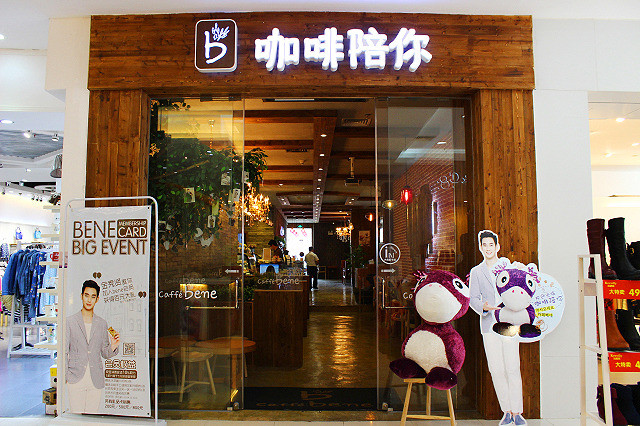
Korean coffee shops suffer from withdrawal trend coffee shops make a profit outside of coffee
Under the popularity of South Korean dramas such as "you from the Star", Korean coffee shops have sprung up all over the country in the past two years. However, this kind of Korean coffee shop, which is mainly joined, has suffered a wave of closures in China this year. Recently, Korean coffee franchises have disappeared at the International Coffee Exhibition in Beijing. The Korean coffee shop exhibition did not show up at the China International Coffee Show held last year.

Market trend of boutique coffee South Korean coffee imports soar
According to statistics released by South Korea, from January to September 2014, South Korean coffee imports rose 18.7% year-on-year to 99372 tons, surpassing the largest imports since 1990 (92040 tons) in the same period in 2011. Over the same period, coffee imports surged 21.1% year-on-year to US $382 million. From the point of view of the importing country, the largest amount of coffee imported from Vietnam was 23686 tons.

Korean coffee set off a new trend of "one cup, two drinks".
Where there are Korean dramas, there is coffee, and coffee is very popular in South Korea. Recently, there has been a new trend of coffee in South Korea, that is, two drinks in one cup, and one cup of coffee can enjoy both flavors at the same time. Let's take a look at what this is all about. Recently, a cafe in South Korea has launched a coffee sharing cup, which has attracted a lot of fans as soon as it is launched. Go to the cafe to buy coffee, often

A study on the Development trend of Korean Coffee shops in China: the expansion Strategy presents three advantages
Source: Ruiyide August 19, 2014 release: @ Coffee Club RET China Commercial Real Estate Research Center selected 12 representative coffee shop chains in the past 17 years to conduct in-depth research on its development in China. In the country's first launch of the "Korean coffee shop China Development trend Research report", to give you a glimpse of the new power of the coffee shop chain brand market! Europe

There are still many problems behind the popularity of Korean coffee, don't blindly follow the trend!
Korean coffee has developed rapidly in recent years, in addition to well-known brands such as diffuse coffee, coffee and other well-known brands, shanzhai brands are also emerging one after another, blooming everywhere. There are still many problems behind the popularity of Korean coffee, the cost is high, the pressure is high, and the core competitiveness needs to be further cultivated. What is the current market environment for Korean coffee? Where is the bottleneck? What are the prospects? Want to open a Korean coffee shop
Look like a god, not like Korean coffee or repeat the same mistake of table coffee.
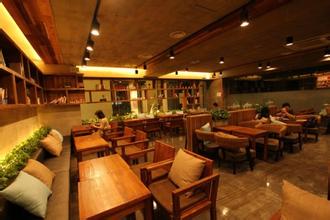
On the streets of Beijing and Shanghai, there are some Korean cafes with large floor-to-ceiling windows, pastoral and forest decoration, multi-woody and retro objects, coffee mainly selling fancy sweet drinks, and Korean cafes with dessert foods such as waffle. In the last two or three years, Korean coffee has been distributed in the Chinese market and has shown a trend of rapid development. With the help of coffee products

Happy Coast Coffee, leading the trend of Korean Coffee Culture
China's strong economic strength is the cornerstone of the expansion of the coffee market. The expansion of the coffee market depends on the sustained development of the domestic economy and the continuous growth of consumer income. The number of cafes in China has doubled in the past five years from 15898 in 2007 to 31783 in 2012, to about 46000 in 2015. Although coffee is relatively late in China, it has been kept in China for 10 years.

Development trend of Korean Coffee Market in China? Basic information of Chinese coffee market?
Professional coffee knowledge exchange more information about coffee beans Please follow the coffee workshop (Wechat official account cafe_style) A large-scale coffee shop expansion is in the pipeline. Seesaw announced last month that it had received 45 million RMB A round investment from Baifu Holdings, which is owned by Hony Capital. The founder of another Shanghai boutique coffee brand, Yingji Coffee, said in a recent interview that it was preparing for 3.

The competition in the coffee industry is fierce! There will be a new round of price increases!
Professional coffee knowledge exchange more coffee bean information please follow the coffee workshop (Wechat official account cafe_style) more boutique coffee beans please add private Wechat Qianjie coffee, WeChat: Qjicieex October 5, according to media reports, South Koreans consume an average of 352 cups of coffee a year.

Brazilian coffee bean exporters want to open up South Korean market
It is reported that the number of coffee shops in South Korea rose to 15000 last year, nine times the number in 2006. Starbucks has 554 stores in South Korea.

Why does Korean coffee go from shining to declining in just 5 years?
South Korea has been invading culture with music, movies and TV dramas for more than a decade. Fashionable, romantic and aesthetic have become synonymous with Korean products. Cafes are no exception. Fashion and romance are prominent labels for almost all Korean families. Compared with Starbucks' high proportion of non-franchise policy, the rapid rise of Korean coffee is largely due to the opening up of the franchise model and co-operation mode. seven

Korean coffee is expanding crazily in China, rising and falling in just one year.
Stores are closed, franchisees run away, Korean coffee brands continue to storm, exposing the problem of insufficient management control under the rapid growth of enterprise scale. According to RET Rui Yide's "Research report on the Development trend of Korean Coffee Shop in China", Korean coffee brands tend to join or co-operate as the main expansion mode, of which the proportion of coffee with you accounts for 10%, and that of zoo coffee is higher than that of zoo coffee.
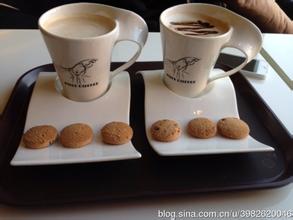
The popularity of China has led to the rapid expansion of Korean coffee in China-from the ups and downs of Korean coffee.
Headquarters control is not strong enough, single store default cost is low, stores close, franchisees run away, Korean coffee brands continue to storm, exposing the problem of insufficient management control under the rapid growth of enterprise scale. According to RET Rui Yide's "Research report on the Development trend of Korean Coffee Shop in China", Korean coffee brands mostly take joining or co-operation as the main expansion mode, in which coffee accompanies you.

"Coffee +" is a trend in the coffee industry.
Many luxury goods industries have also opened restaurants and coffee stores, such as Dior's dessert shop in Seoul, South Korea; GUCCI's flagship stores in Milan, Tokyo, and Shanghai have cafes; domestic women's clothing brand Shanghai La Chapelle has also announced its stake in cafe operator TNPI, acquiring a 20.75% stake in the company for US $3.75 million and owning the Italian coffee chain Segafredo Cafe.
Starbucks China market is divided, Korean coffee shops have opened nearly 600 in two years.
In the traditional impression, the European and American coffee shop brand Starbucks has been the "coffee shop scenery" in major cities for a long time, but in recent years, similar to popular film and television dramas, fashion clothing and other fields, there has also been a "Korean wave" in the coffee shop field. RET Ruiyide China Commercial Real Estate Research Center released the first "Research report on the Development trend of Korean Coffee shops in China" on August 18.
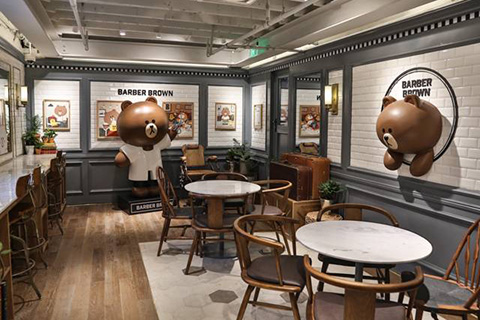
Comments | Why is the Korean cafe that once expanded crazily collapsed?
Korean coffee brands partnered with Chinese investors in 2012 to enter China by relying on the then popular Korean Wave and encroach on the Chinese coffee market in a frenzied expansion.

Coffee Industry Future Design trend Coffee Industry Coffee will continue to be popular in China's Coffee Market
With the gradual infiltration of western culture, coffee culture began to be popular in China. With the accelerated pace of life and the improvement of the quality of life, an elegant cafe and a cup of fragrant coffee have become an essential part of people's modern life, business, leisure and even love. With the growth of coffee culture, cafes in many cities in China are springing up like bamboo shoots after a spring rain.

The Bank of Korea has made a strange move to increase the number of coffee shops to attract customers
Professional baristas Please follow the Coffee Workshop (official Wechat account cafe_style) the NH Peasants' Association Bank Coffee Shop in Seoul's Yisan financial center the rise of Korean online banks has led to changes in the business models of major bank outlets. South Korea's "Asia" reported on the 24th that South Korean bank outlets attract more customers to handle financial business by adding coffee shops and semi-intelligent services.
Development of Coffee in Korea South Korea imported nearly 140000 tons of coffee in 2014
Although South Korea's economy is still in the doldrums and consumption is shrinking, South Korea's coffee imports hit an all-time high in 2014, according to statistics released by the South Korean Customs Agency on the 29th. Data show that South Korea imported 139764 tons of coffee in 2014, an increase of 14.8 percent over the previous year, and imports of US $595.415 million, an increase of 18.2 percent over the previous year. Coffee imports are at an all-time high.